On February 19, 1942, President Franklin Roosevelt signed Executive Order 9066, that resulted in the forced removal of all Japanese and Japanese Americans from Alaska and the west coast of the US.. Soon after EO 9066 was signed, temporary prisons, euphemistically called “Assembly Centers”, were constructed up and down the west coast to house the innocent Japanese and Japanese Americans. The actions were unlawful, as not a single person imprisoned had been convicted of a real crime. Their crime, according to the government, was their race. The act, once mischaracterized as one of the worst mistakes made by the US during WWII, is now viewed not as a mistake, but an overt act of systemic racism. In 1940 Japanese were less than 0.02% of the US population and less than 2.1$ of California's population, which in 1940 was 93,717. The total Japanese in the US mainland in 1940 was 126,948, with 112,353 on the Pacific Coast (Immigration and Census data).
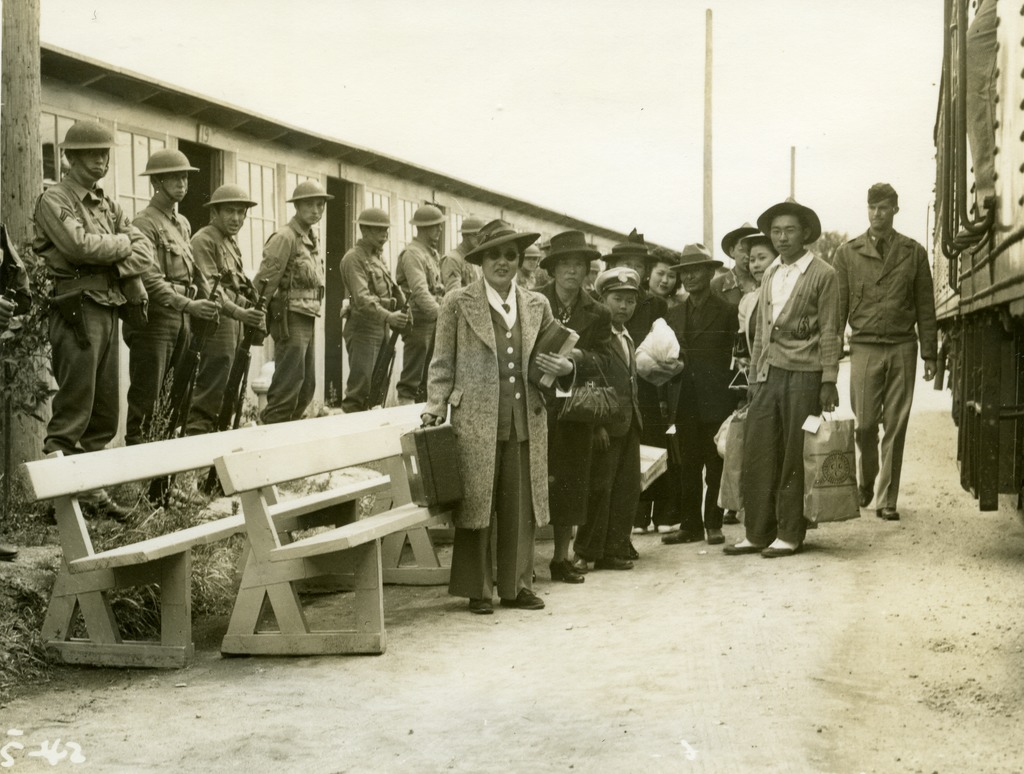
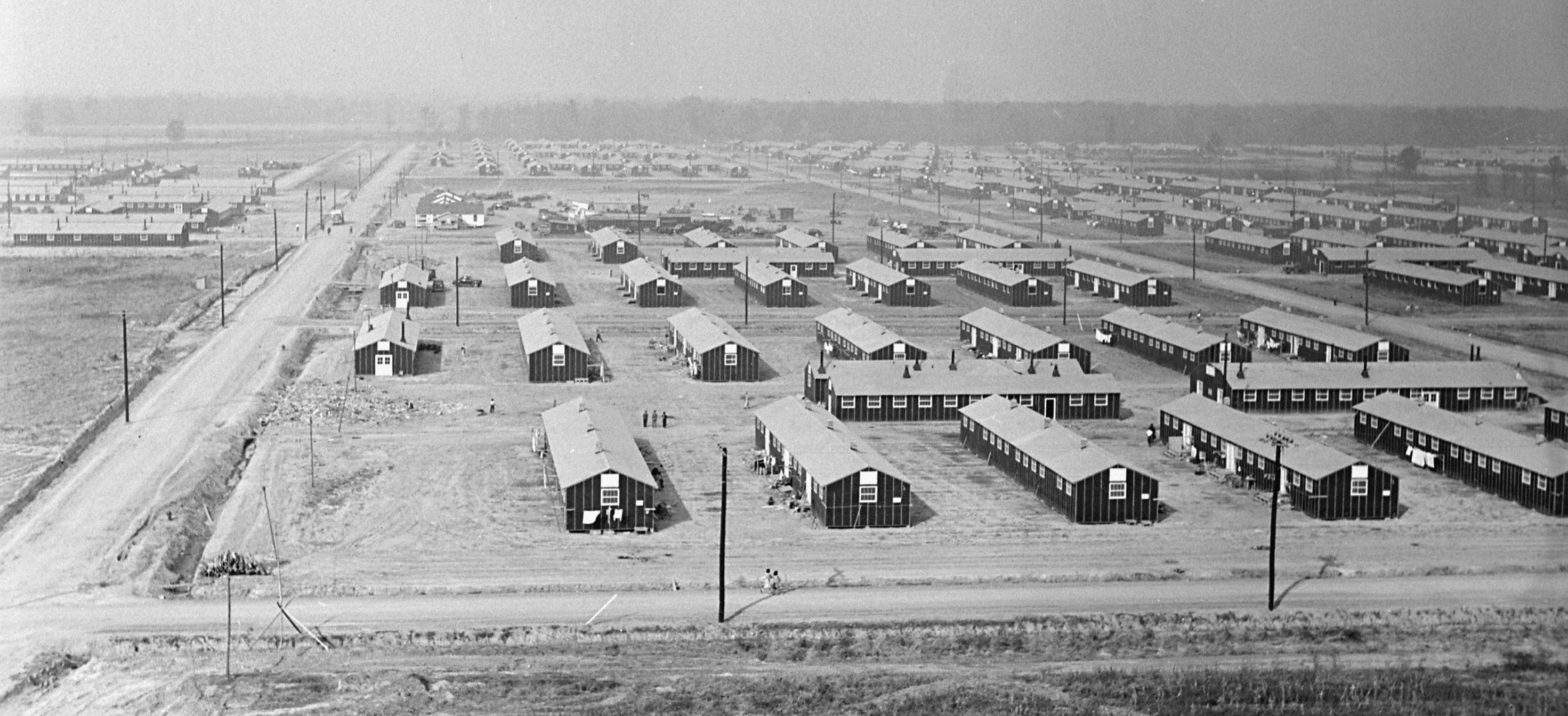
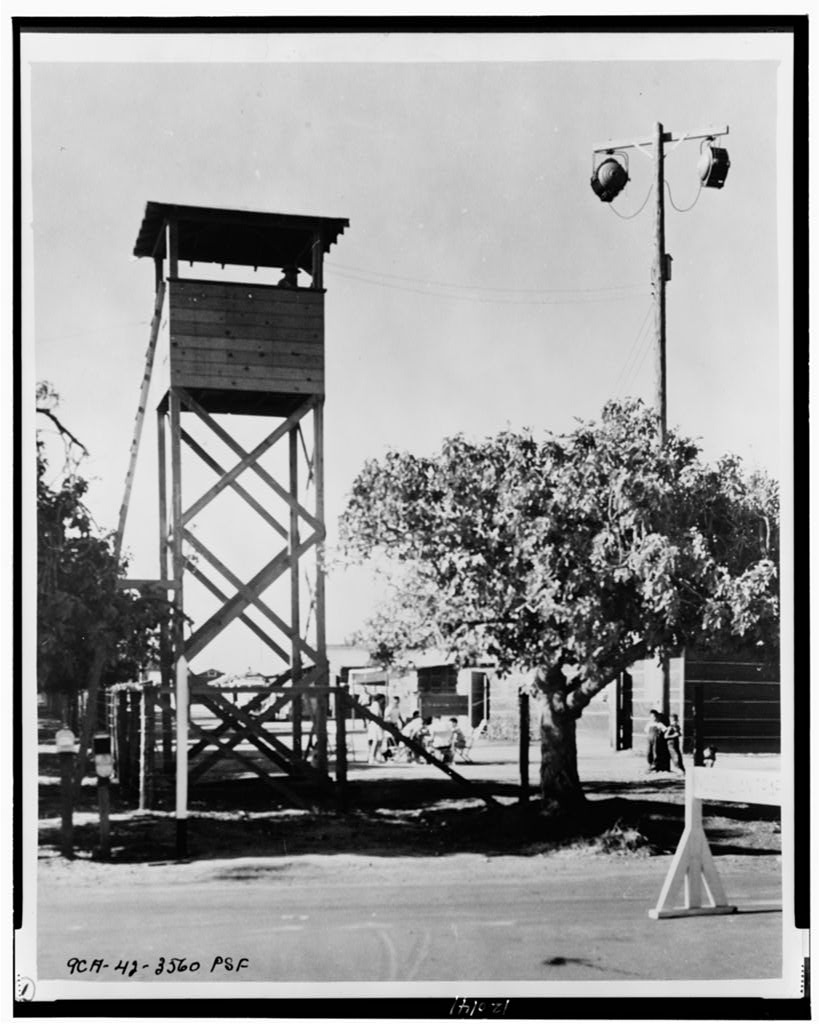
The day after Pearl Harbor, the FBI began rounding up leaders of the Japanese community and took them to both local and unknown prisons. Those who had the means and a place to work and reside out of the evacuation zone fled the west coast to escape imprisonment. The remaining innocents were forced into the primitive detention facilities (prisons). The prisoners were then shipped by train or buses to 10 concentration camps constructed in desolate regions of the country, including the swamps of AR, that had two, the Jerome and Rohwer Concentration Camps.
temporary prison inmates were shipped by train to the Jerome Concentration Camp in Arkansas. Photo, US Army Signal Corps, 1942